

Combat Against Climate Change on Cotton Communities (C5)
Health
Agriculture
Summary | Decision-Making Context and Needs | Earth Observation Data Products and Information Underlying Observations and Data Sources | Impacts and Benefits | Further information and guidance
C5 is an agroclimatic advisory solution designed to help cotton communities adapt to climate change by combining satellite Earth observation (EO) with climate reanalysis and forecast data. The feasibility study in western Bangladesh (Kushtia, Meherpur and Chuadanga) produced a prototype service that translates complex weather and EO-derived indicators into simple, actionable guidance for farmers and the support organisations that serve them. The core innovation is an explicit focus on farmer health and labour productivity under extreme heat, alongside crop context information to support agronomic decisions and supply-chain resilience.
Key outcomes from the feasibility study include:
The demonstrator project was undertaken in 2023-24 by Assimila Ltd (UK) and CottonConnect - a social enterprise that works across the cotton supply chain to improve sustainability, traceability and livelihoods by delivering farm programmes and supply-chain services that make cotton production more resilient.
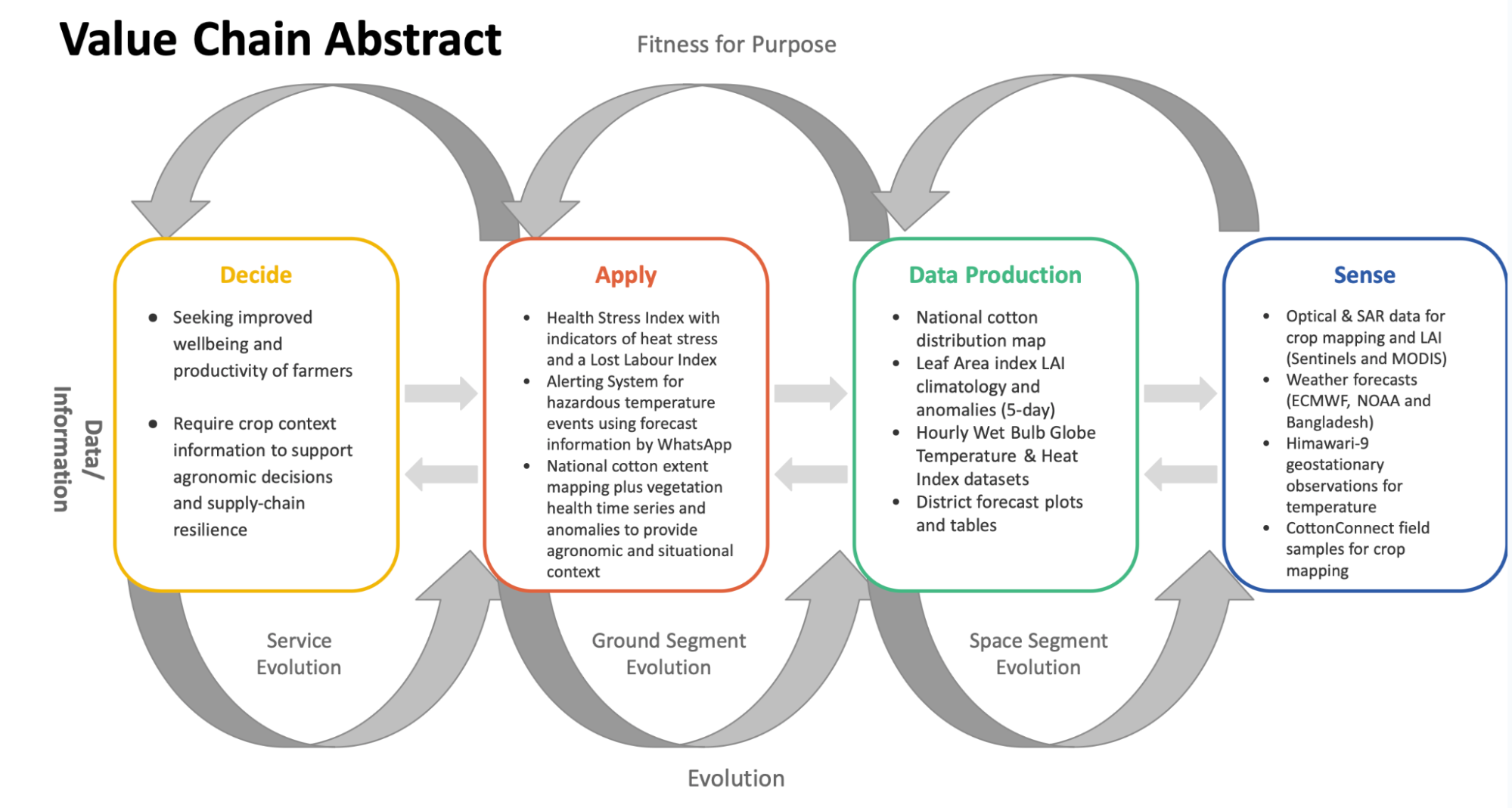
Figure 1: The value chain for the C5 project
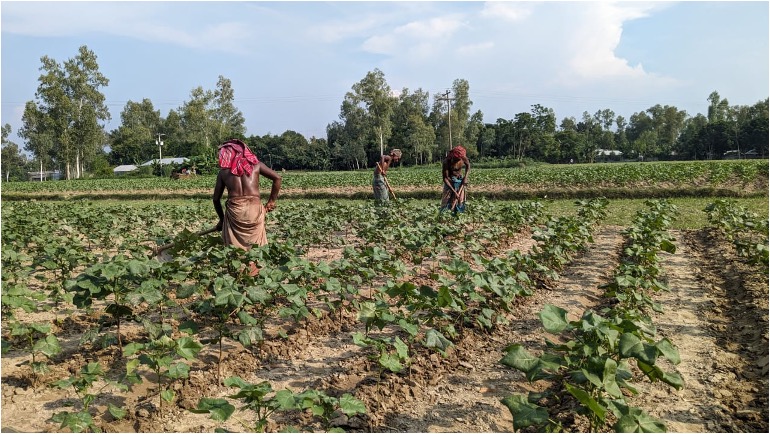
Cotton production is a labour-intensive, climate-sensitive livelihood activity. In Bangladesh, cotton communities are increasingly exposed to higher temperatures and humidity, more frequent heatwaves, and disruptive extremes such as droughts and flash floods. Stakeholder consultations highlighted that extreme heat and humidity are already constraining safe time in the field, reducing daily productive hours and increasing the incidence of dehydration, cramps and heat-related illness.
“Usually we work outside from 6 am to 1 pm. But when the temperatures are high, we can only work from 6 am to 10 am. That loss of 3 working hours means that jobs can take 2–3 times as long if the hot temperatures persist.” (Male cotton farmer, Bangladesh)
Adaptation decisions the project was designed to support include:
The stakeholder consultation process highlighted the trend of lost labour hours due to adverse environmental conditions as an issue of local concern. The project analysed trends for the study region in Wet Bulb Globe Temperature (WBGT), a heat metric that considers air temperature, relative humidity, wind speed and direct solar radiation - factors that determine how much heat a person experiences and their ability to cool down through sweating. It is a metric that has been found to be a stronger predictor of negative heat-related health outcomes than air temperature or the heat index (a combination of air temperature and relative humidity). It is also used in national legislation and workplace health and safety. The analysis showed a clear upward trend over the past 3 decades in the amount of time workers would be recommended not to work to stay within safe physiological boundaries.
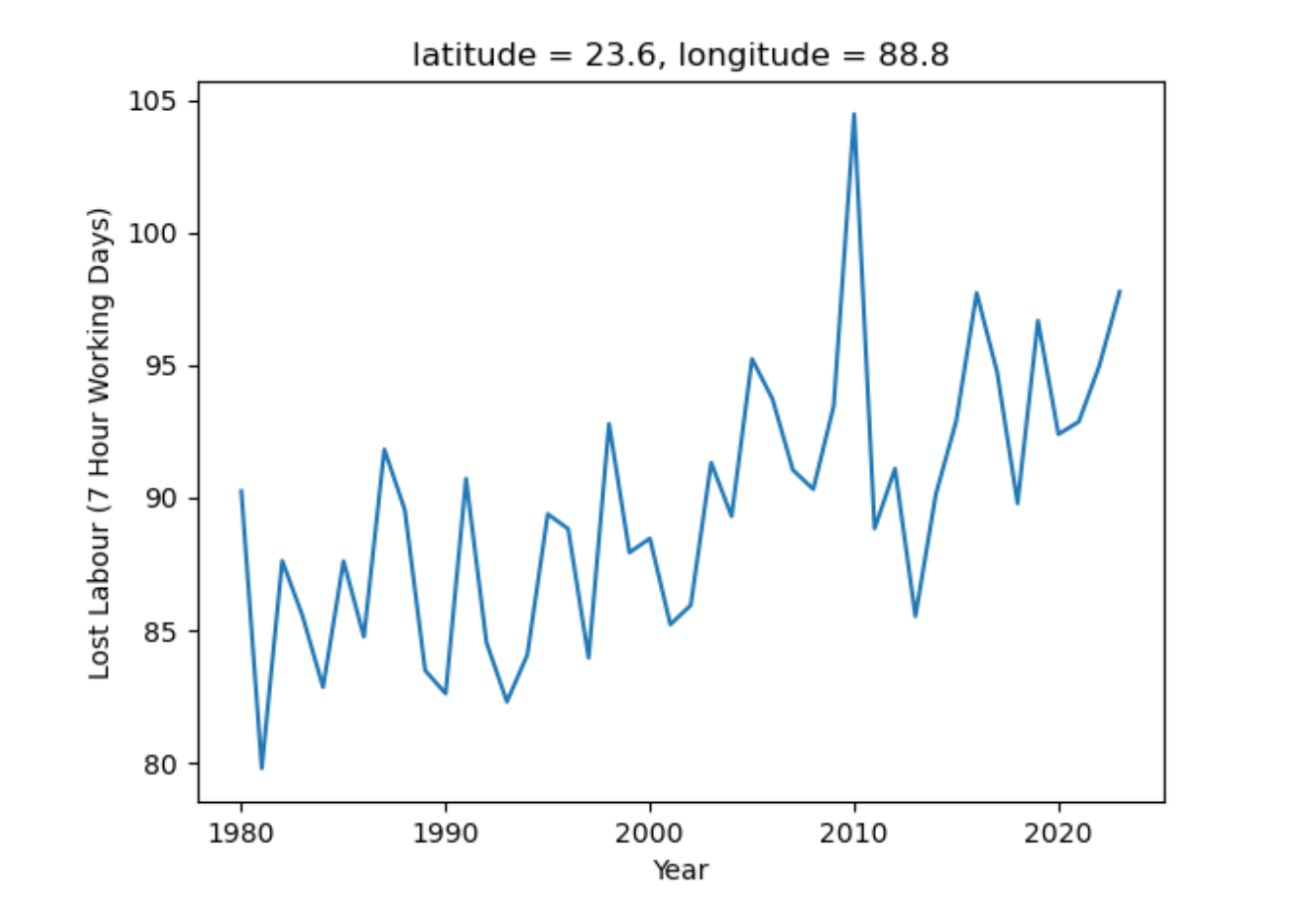
Figure 2: Total number of working days in which it would have been recommended not to work to remain safe in the heat conditions in Chuadanga district in Bangladesh.
Project end users and stakeholders span the cotton supply chain: farmers and pickers (women and men), ginners and spinners, seed companies, NGOs working with farmer groups, and government agencies including the Cotton Development Board and the Ministry of Agriculture. CottonConnect plays a central intermediary role, translating analytics into locally appropriate advice and disseminating it through established farmer engagement channels.
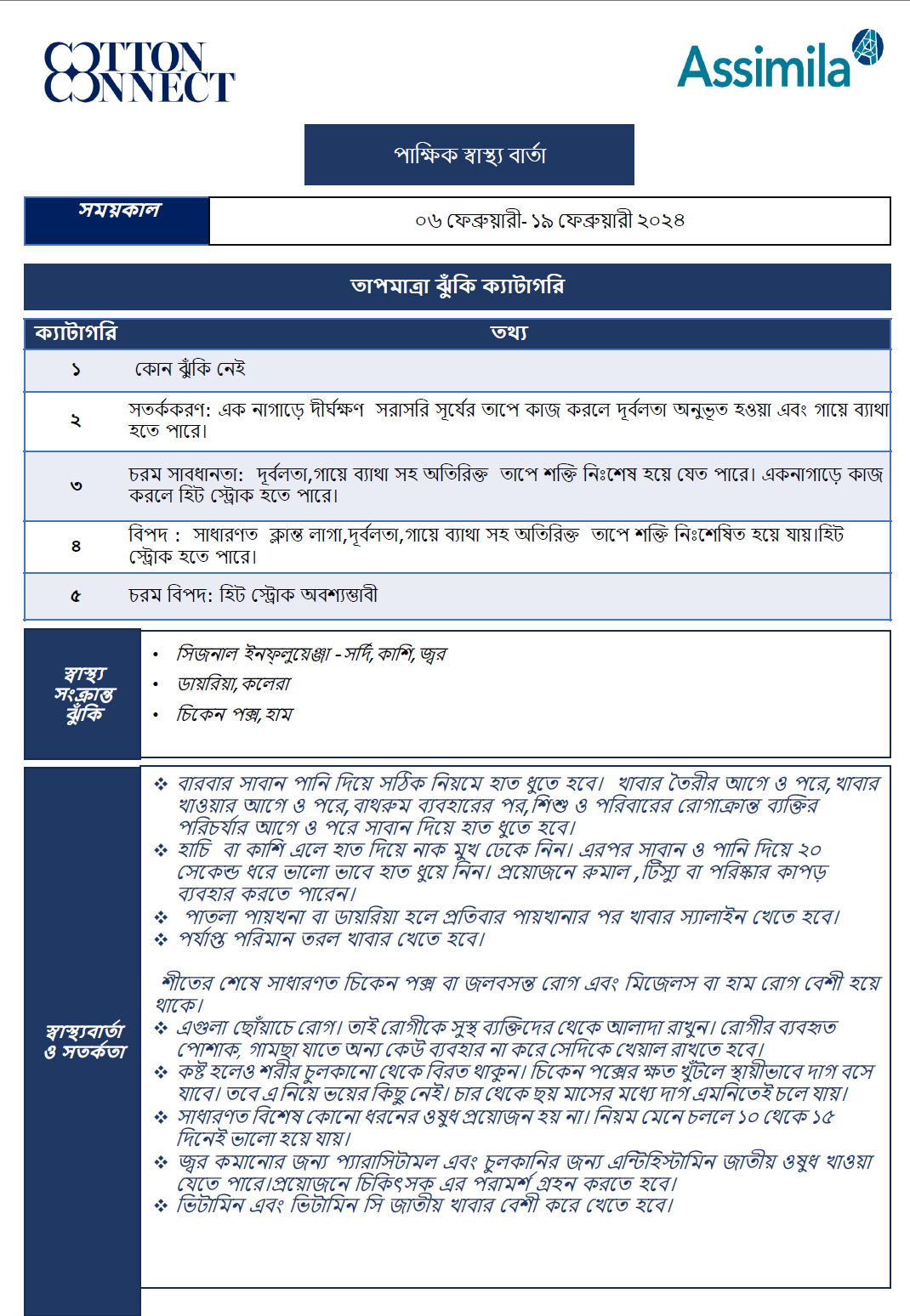
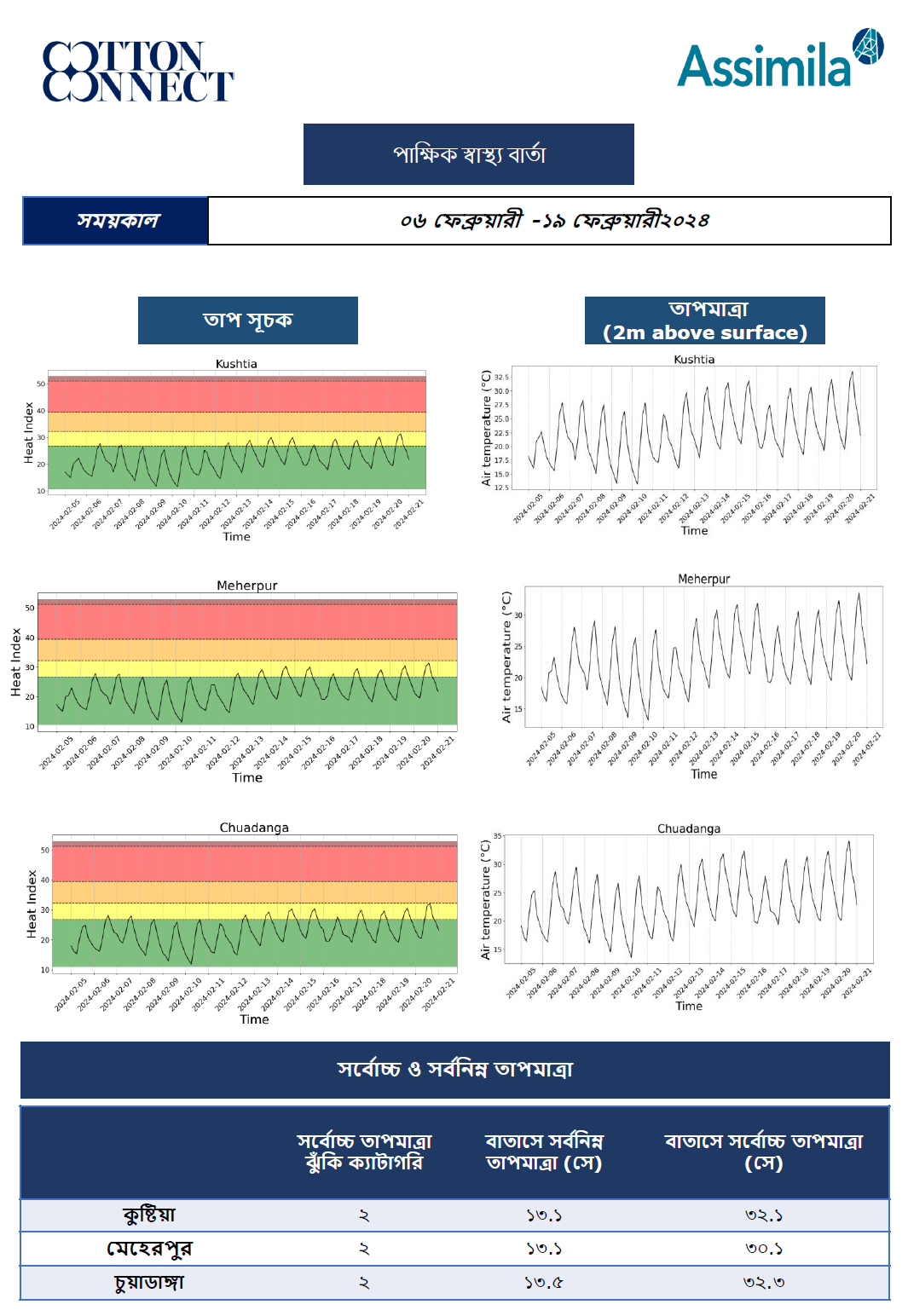
Figure 3: Health Bulletin / advisory product example for Health Bulletin 06-19 february, 2024 in Bangla.
C5 produces and uses EO-derived products that directly address the decision needs described above. Key products include:
All project datasets and operational bulletin inputs were published to an open repository to support transparency and reuse by partners.
| Product | Coverage / resolution | Update frequency | Delivery to users |
|---|---|---|---|
| Cotton distribution map | Bangladesh; 10 m | Annual (prototype demonstrated for 2023) | Maps for analytics and planning; supports targeting and traceability |
| LAI climatology and anomalies | Bangladesh; 500 m | 5-day (time series) / 4-5 day products | Charts and maps; crop context in workshops and advisory workflows |
| WBGT / Heat Index / Lost Labour | Bangladesh; 0.1 degree (historic archive) | Hourly plus daily/annual summaries | Open repository; supports trend analysis and planning; informs bulletins |
| District forecast plots and tables | Pilot districts | Daily processing (fortnightly dissemination) | Bulletins, WhatsApp/audio summaries, and printed handouts |
Summary of products, update frequency and delivery mechanism
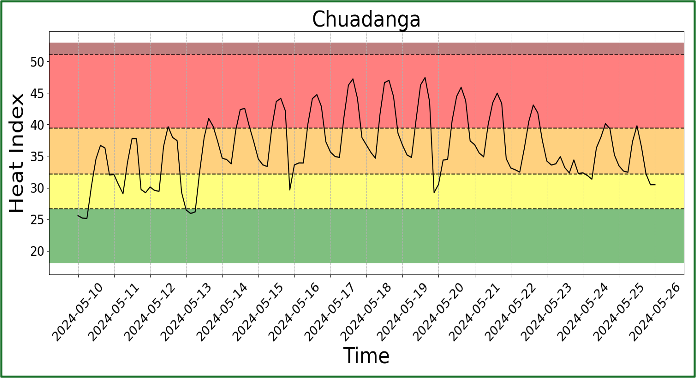
Figure 4: Heat Index product developed for farmers in Chuadanga
C5 integrates multiple EO and climate data sources. The main observations and datasets used include:
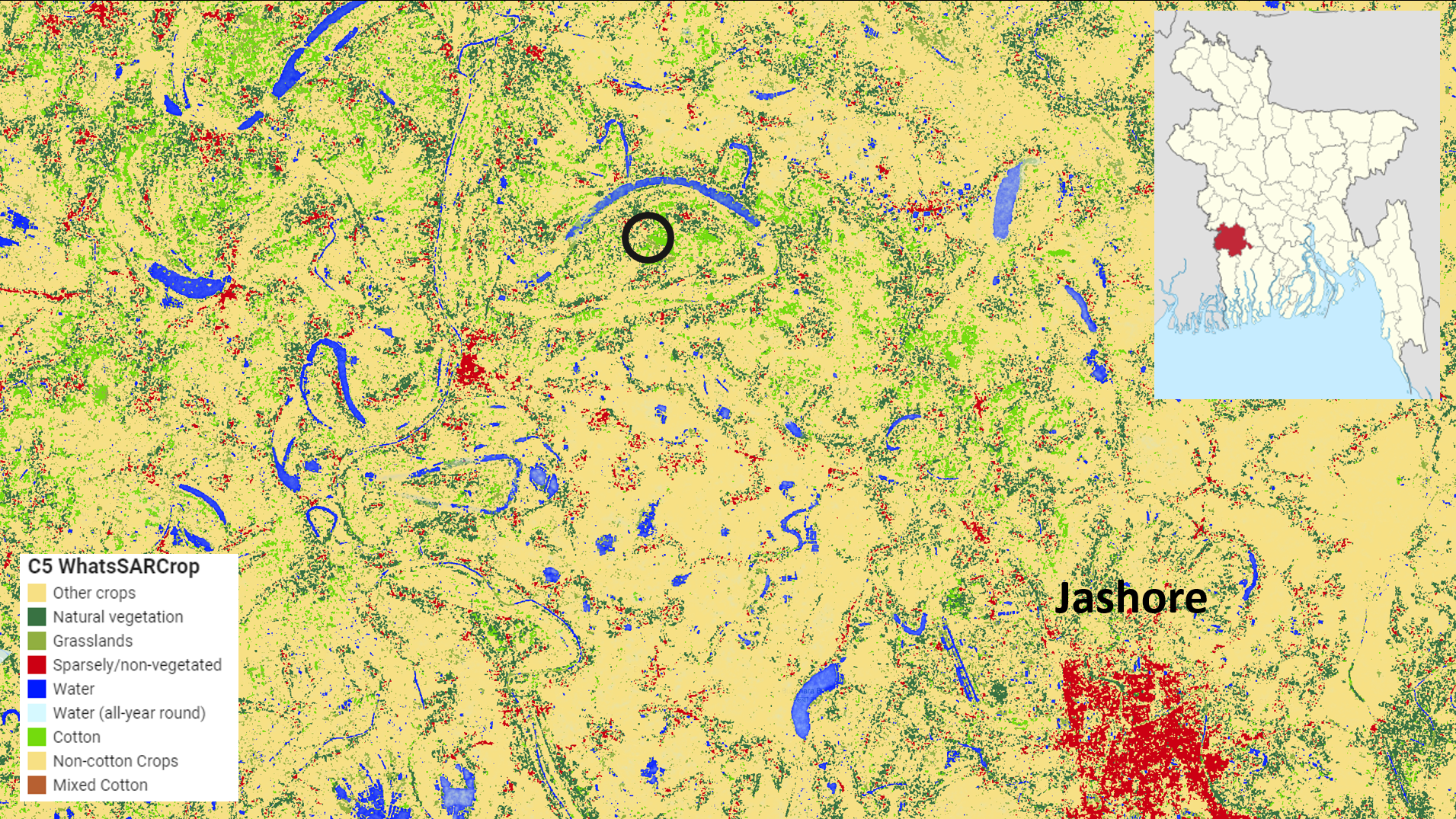
Figure 5: Cotton extent map
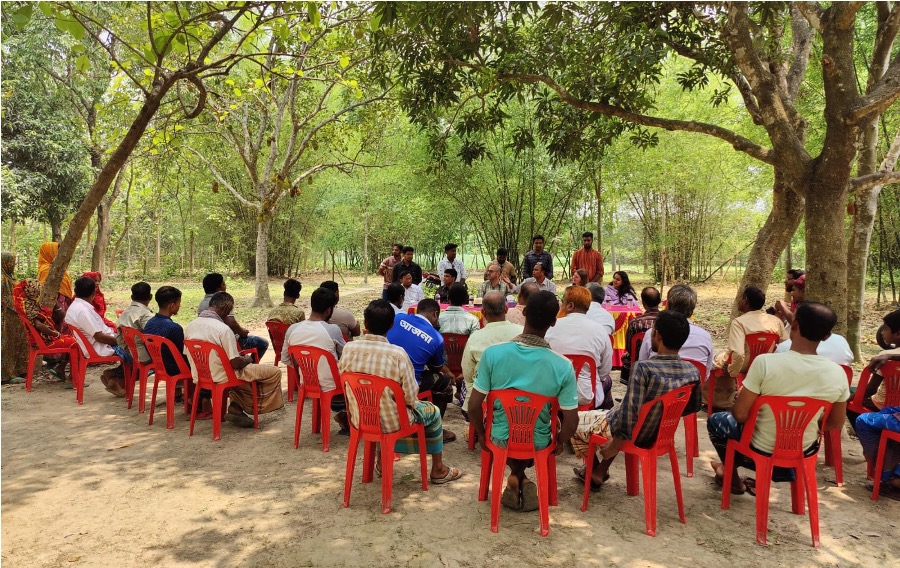
Figure 6: Farmer engagement & feedback session in Chuadanga
C5 was designed to produce measurable value to end users by converting EO and weather data into decisions that protect health and maintain productivity. Benefits observed and evidenced during the feasibility study include:
Evidence and performance results reported during the project include:
Key delivery lessons included the need for hybrid dissemination (digital plus in-person) due to uneven smartphone/WhatsApp usage and literacy barriers, and a recurring user requirement for mid-term and seasonal forecasts (temperature and precipitation) to support planning across the full cotton production cycle.
Open data repository (C5 outputs): bit.ly/c5data
Core EO / climate datasets: Sentinel-1 and Sentinel-2 (Copernicus), MODIS LAI, ERA5/ERA5-Land (C3S), NOAA GFS forecasts, Himawari-9 AHI, Copernicus LST.
Suggested points of contact:
References (project documentation):